






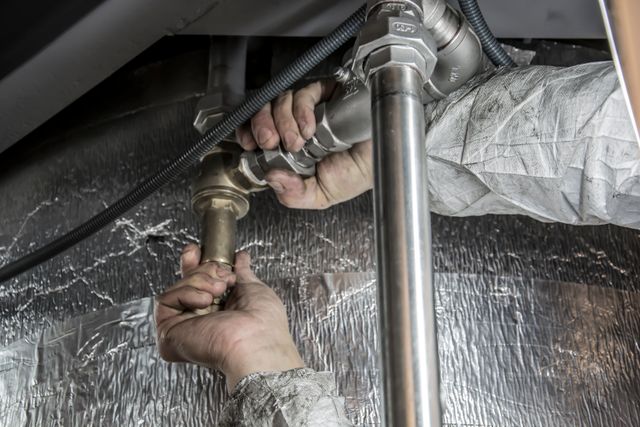
The two flares may have an identical appearance when assembled, but they could perform totally differently when subjected to loads. One will last long through thousands of cycles of pressurisation while the other will leak after a few months. This variation is often hard to identify from the exterior appearance. It depends on the geometry of the flares, which is entirely dictated by the tool used to create them.
How a Flared Joint Actually Seals?
A flared connection seals through metal-to-metal contact between the outward cone of the flared tube and the matching angled face of the fitting. When the flare nut is tightened, it draws the two surfaces together under compression. The seal depends on those surfaces making full, even contact around the complete circumference of the cone.
Two angle standards govern most flared connections used in Australian trade work. Investing in a quality pipe flaring tool ensures you can reliably meet either standard. SAE 45° flares are used in refrigeration and many domestic plumbing applications. JIC 37° flares are the standard for hydraulic systems. A 45° flare seated in a 37° fitting produces a line contact rather than a surface contact, concentrating stress, reducing the effective seal area, and creating a connection that will fail under operating pressure. These two systems are not interchangeable, regardless of how similar the external fittings appear on a shelf.
What Separates Precision From Adequate?
The forming cone is the real deal where quality starts to kick in big time in real-world applications. A decent piece of hardened steel cone will keep itself accurate through thousands of uses no problem. In contrast, a flimsy cone made from some lower-grade alloy will start to fall apart after a few goes against harder tube materials. By the time you notice any wear on the cone surface, you’ll have already been churning out a decent number of subpar flares that won’t be tested until everything’s up and running.
According to the Australian Bureau of Statistics, the construction and trades sector employed over 1.3 million Australians and generated $568 billion in income for the year 2022-23, with construction services making up 68.6% of that number. All that can make or break when it comes to the precision tools being used; after all it directly affects the reliability of the end product.
Refrigeration and HVAC: Where Flare Quality Affects System Performance Directly?
Split system and commercial refrigeration jobs rely on copper tube connections being flared. The problem is, in these applications the refrigerant lines are put under a fair amount of stress; they’re changing from high to low pressure and back again with the circuit, and operating across a wide temperature range that stretches the tube and fitting material every which way.
Now a flare that’s slightly too big, where the cone is a mite too big for the fitting seat, will make contact appear flush but it’s still not right. The nut still tightens up, the joint looks good, and it’ll probably hold at initial pressure, but under operating conditions all that stress on the fitting seat causes it to start deforming and eventually you’ll get a leak that’s a nightmare to find.
Automotive and Hydraulic Work: Where Tolerances Are Absolute?
Flaring in brake lines in the automotive trade is serious business; it’s in a whole different league from most other flared connections. There’s a specific standard for brake circuits, the double flare, because it has to hold true even at full braking pressure. Repeated high-load braking and emergency stops are no issue.
Hydraulic systems in earthmoving, agricultural, and industrial equipment operate at pressures that’ll make even a small fault in a fitting a serious issue, not just a problem with the equipment. You need to use the tool that’s specified by the fitting standard and inspect each flare with a matching fitting before you even think about assembling it; it’s just good practice.
Maintenance and Replacement: When to Stop Trusting a Tool?
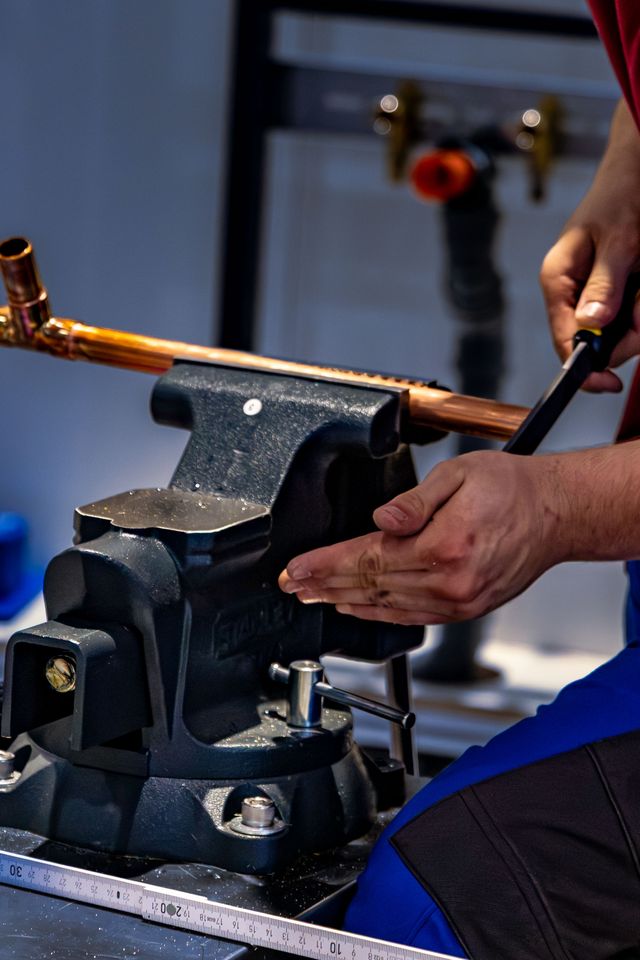
It’s easy to overlook, but a flaring tool will degrade over time in some not-so-obvious ways. For starters, the cone face will start to get scored, which will end up on the flare and change the cone’s effective diameter. Worn yoke jaw surfaces can also let the tube move around during forming. The best way to check if a tool is still up to snuff is to try a flare against a matching fitting and see if it seats properly; any sign of movement or daylight around the edge of the seat and you know the tool’s still in substandard condition.








Leave a comment