






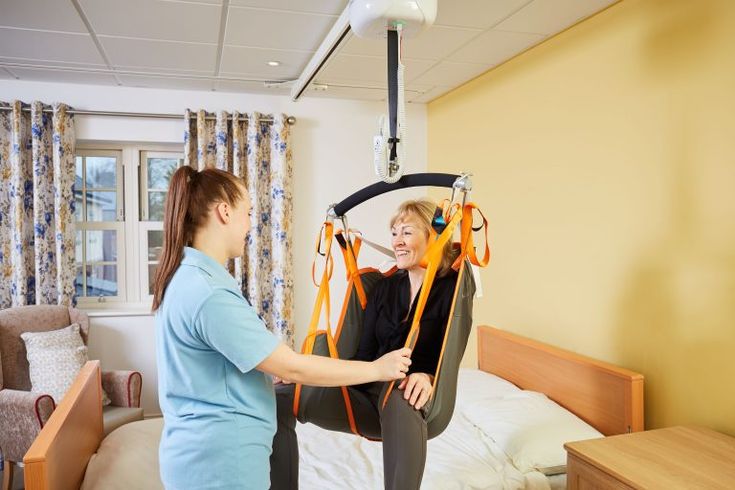
Suppose that you attempt to move a heavy body without the appropriate equipment. Not only is it difficult but may also provoke injury. Now, consider that situation in the context of healthcare facilities where a patient transfer is a daily scenario. And this is where hoists come in-important equipment that is meant to be used to move patients safely and efficiently. Whether you are in a hospice, in a nursing home, or you are giving care at home, knowing the importance of hoists can help in a number of ways to make the experience of the patients and caregivers alike much safer.
Moving on the subject matter a notch further, we should find out what exactly a hoist is and why it must form part of every care giving atmosphere. The significance of safe patient transfers is difficult to overestimate; they play an essential part in preserving dignity and reducing the risk. Be a part of us and see how we will unravel the various varieties of hoists present and give an outline of their irrefutable advantages to the health outcome during transfers.
What is a Hoist and How Does it Operate?
A hoist is a mechanical device used to lift and transfer individuals with limited mobility. It typically consists of a sling, a supportive frame, and a lifting mechanism that may be manual or electrically powered.
The user is positioned securely in the sling to ensure comfort and safety. Once in place, the caregiver operates the hoist controls, allowing the person to be gently transferred between surfaces such as beds, wheelchairs, or chairs.
Built-in safety features like locking brakes and sturdy frames help prevent accidents during transfers. Some hoists are designed for use in confined spaces, while others are better suited for larger areas, depending on their structure and mobility.
With modern advancements, hoists are now easier to maneuver and offer adjustable height settings to reduce strain on caregivers. Understanding how these devices work highlights their importance in promoting safe and efficient care practices, especially when using an aged care hoist.
The Significance of the Safe Patient Transfers
Precautionary patient handovers are essential in health care facilities. They minimize the chances of injury among patients and caregivers. Lifting may cause falls, strains, or be worse than that when the correct techniques are not applied.
Patients who are not very mobile would feel vulnerable at these transitions. Their safety serves the purpose of upholding dignity and comfort. It builds trust between the care providers and the patients.
Unsafe transfers may cause injuries with long-term consequences of recovery. The stress of a caregiver could lead to absenteeism or high healthcare expenses because of injuries when carrying out the transport of a patient.
Moreover, healthy transfers also lead to good health. Patients may also participate in the rehabilitation activities when they are at ease. This interaction is improving their recovery and making them generally better.
Having a safer patient transfer should be a priority area that will foster better health conditions among all stakeholders including patients and staff.
Different Types of Hoists
There are several types of hoists with each being adapted to suit a given need in terms of transferring patients. Ceiling hoist is commonly used in the homes and medical facilities. It has the plus of being mounted on tracks so that it can move freely within the rooms.
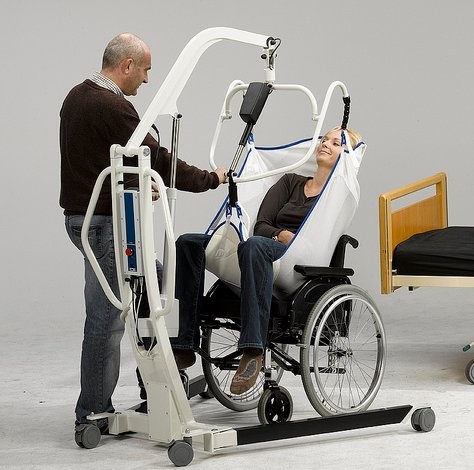
Another flexible product is mobile hoists. These are freestanding units and can be easily moved and be utilized elsewhere. Their wheels make it mobile making them suitable in dynamic environments.
In the case of bariatric patients, there exist heavy-duty hoists. These models have higher weight capacity besides being safe and comfortable to make the transfers.
Standing hoists are used in people with some standing abilities who require assistance. They assist the patients to move in and out of sitting and standing in a smooth movement.
Both types of types are used in a specific purpose, which improves the efficiency and safety in the routine of patient care. The choice of one will be based on personal needs and conditions.
Advantages of patient transfer using a hoist
Patient transfers made with the use of a hoist are much safer. It minimizes the risk of falls and injuries among the patients and caregivers. Lifting is less challenging and more managed with the right equipment.
The other one is the essential comfort. The patients feel that there is less stress when being transferred using a hoist. The assistance offered contributes to reducing anxiety during transfers and, as a result, the experience becomes pleasant.
Efficiency is also crucial in a healthcare location. The process of transfer is faster with the use of the hoists and the correct techniques are observed. This would enable the caregivers to concentrate on other issues of importance without affecting the quality of care.
Besides, the use of hoists may help to increase the ergonomics of the staff members. Physical strain is also reduced to avoid musculoskeletal injuries in caregivers to have longer careers in occupations that require a lot of physical effort.
Use of the hoists in normal patient care also promotes independence. They help the people who are not very mobile to be active in their own transfers wherever feasible.
Education and Training on how to use Hoists
Training and education are also important as to the correct use of hoists. The medical personnel should be conversant with the machinery to enable safety of the patient and the caregiver. Effective training reduces risks that are involved in the lifting and moving of persons.
The skill can also be developed through workshops, seminars and practice sessions. Knowledge on the correct use of a hoist develops trust in using the hoist. Knowledge on various forms of slings is also significant in making sure that transfers are comfortable.
Frequent refresher courses are also used to keep the knowledge up to date. These courses are to be undertaken on the new technologies or methods that might have come up after the initial training. Safety is also encouraged through open communication between staff members in terms of the best practices.
Well-trained personnel also protect patients as well as the chance of injuries to caregivers themselves is diminished. Any organization that is concerned with continuous learning has shown the interest of quality care and patient safety.
Through extensive training programs, healthcare facilities can guarantee the seamless nature of patient transfers besides reducing the risks that may be received by all parties. This background factor ends up putting all parties involved in the right direction, which makes the importance of the effective use of hoists in the medical setting.










Leave a comment