






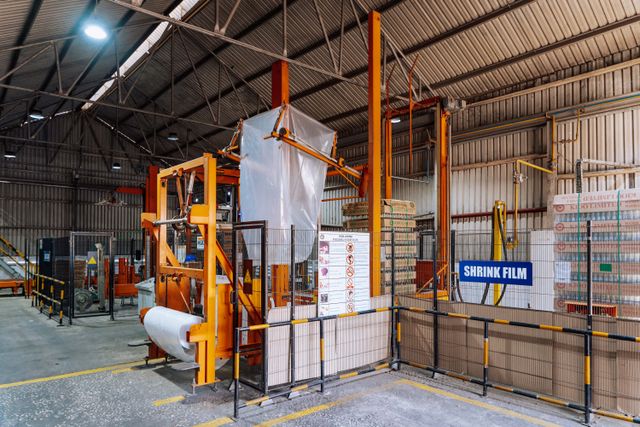
Three months on from when it was installed, it’s worth noting that the amount of film waste is on the rise, the seal quality is all over the place, and spare parts are just collecting dust in some warehouse in Europe with a delivery estimate that still has two weeks to go. To be honest, no one on the floor is really surprised. The machine was picked because it was cheap, and it was small enough to fit in the space they had. Now it turns out those aren’t the factors that really matter once production starts getting into full swing. This isn’t a unique story, it’s actually a pretty common one in Australian manufacturing and logistics outfits, and the costs of it all just sort of add up over time in the background of every shift.
One Label, Two Very Different Machines
Shrink wrapping is more complicated than most people give it credit for. L-bar sealers paired with shrink tunnels are a two-step process, which is to say they have different jobs and aren’t interchangeable. A hooded shrink wrapper is a good fit for weirdly shaped products or low volume runs where things don’t need to change often. An L-bar and a tunnel is better suited to flat products running through all day at a higher speed.
Film compounds the mess even further. Polyolefin and PVC behave differently under heat, have different food-grade labels, and fit into Australia’s packaging rules in different ways. If you pick the film before you decide on the machine, or if you decide on the machine before you know what you need to wrap, that’s where all the problems start.
Compliance Is Now Centre Stage
The rules around packaging in Australia have shifted a lot since 2020, and shrink film is right in the middle of it all. The Australian Packaging Covenant Organisation is saying that only 86% of packaging on Australian shelves is currently good enough, either reusable, recyclable or compostable, which is nowhere near the 100% target the government wants. And what’s really bad is that the recycling rate for plastics is only 20% and the government wants to get that to 70%. Given the Environment Protection Reform Act 2025 is on the way and there are plans to make businesses pay for the waste their products make, businesses who choose shrink film now are making a choice that’ll be decided by a very different set of rules in a few years at most.
Polyolefin film seems to be in a better position than PVC when it comes to the current state of our recycling infrastructure. The gauge of the film and how much it’s pre-stretched can make a big difference to the total amount of plastic that ends up on the market, and that’s going to be what we’re paying for when the EPR, that’s Extended Producer Responsibility, scheme is put in place. Companies who have to report to the Australian Packaging Covenant Organisation need to be able to say what packaging has done in terms of performance, and not just use some assumption based on the current price.
Getting Volume Calculations Wrong Is One Of The Biggest Mistakes You Can Make
Using your peak production day to choose a machine is not a good way to go. A hand operated hooded system can handle around 100–200 packs an hour with a good operator, while a fully automatic side-seal machine can do 60 cycles a minute for a long time. What you need to think about is the difference between that and the actual average number of items you sell on a normal day over several months with different products and changes in the operation and the inevitable slight downturn from shift to shift.
Companies who are running lots of different SKUs through one shift are also going to have a problem with changing over. On basic machines this can take 15 to 30 minutes to sort out, all the time for adjusting the width of the film and stuff like that.
Where The Return Manifests Itself, By Industry?
Food processing plants require film and machines that are certified food grade in terms of safety as per the Australian-New Zealand Food Standards Code. In retail products, film clarity, seam quality, and label window accuracy become crucial as they affect shelf presentation. The pharmaceutical sector applies shrink wrapping mainly for tamper evidence; thus, there is a greater emphasis on seal tightness rather than high throughput.
Logistics operations tend to combine shrink wrapping technology with bundle-sleeving or mailing machines to cope with product geometrical variability through the shift, requiring real machine flexibility as opposed to optimised for one product only.
Second-Hand Machine Pricing
There is a secondary market for shrink wrappers in Australia, but the business case is more complex than the purchase price. All shrink wrap machines produced before circa 2018 have been optimised to work with PVC films; therefore, many heat tunnels are not set for tight tolerances of today’s low gauge recyclable polyolefin films.
Parts sourcing for internationally discontinued machines creates structural risk if there is no local service network available. In case of low volume and/or seasonal packaging needs, a well-refurbished manual system from a reputable vendor with local spare parts availability becomes a sensible choice. When packaging is critical to your operations, the lack of warranty and uncertainties in component delivery times will shift the risk equation substantially. The machine that is cheap and fits into your budget will rarely be the most economical option after measuring all additional costs in film waste, lost productivity, and downtime for a year.







Leave a comment