






Do you get sick and tired of digging a grave in a messy stack of tools whenever you begin working on a project? You’re not alone. An untidy working environment may make even the most basic job a frustrator. How about when you enter your garage or shed and know everything will be there, and it will be in the right place. The productivity that comes with the organization of tools in storage can restore to your productivity and make your DIY projects enjoyable once again.
Being an advanced craftsman or only beginning with home improvement tasks, it is important to have a good system of organizing tools. It saves time, eliminates stress and improves safety because the tools are not lost and lead to accidents. Now let us explore processes of how you can turn your messy room into a well-oiled machine with every object placed in its proper place.
Importance of Organizing Your Tools
Putting your tools in place is not merely about style but it is concerning efficiency. A good premium tool storages will save you the much-needed time when you are in need of that lost screwdriver or drill bit.
When everything has its place, it is very easy to get the things needed and move on to work. This lean way of doing things does not only aid in the completion of work in a shorter time but also reduces frustration when executing a project.
Creativity is developed in an orderly tool collection. Having a clear picture of what you have you are motivated to do new things without worrying about the mess you would otherwise be facing after.
Also, safety is encouraged by organization. Accidents/ injuries can occur as tools are left lying around. Storage is appropriate to keep hazards at bay and provide a cleaner working environment where concentration prevails.
Simply, spending some time to plan your instruments is rewarded by efficiency, inspiration, and security the more a project is streamlined and enjoyable.
Evaluating Your Current Storage Setup
Take time to evaluate your present tool storage system. Survey and see what is and what is not working. Do you find everything so simple? Or do you spend much time rummaging through rubbish?
Take into account the space arrangement. Do tools exist in rational clusters? Otherwise, the change may be in order.
The second step is to assess the frequency of use of every tool. Keep very important things at the forefront, and the least commonly used items to more difficult locations.
Also, look over your storage solutions with respect to damage or wear. Drawers or shelves should not be broken, and this may impair efficiency.
Consider the question of whether your current system is an expression of your workflow. Some chaos may result in time wastage and frustration which is not central to any DIY enthusiast.
Essential Tools for Tool Organization
To have a system of storage of your tools, you must have the necessary requirements. Begin with a durable toolbox or organizer which fits your requirements. Find one that has several compartments so that you can store various tools.
Other great choices are pegboards. They are able to store things vertically and have the tools in view and reach. Attach common things at eye level so that they are readily accessible whenever they are needed.
Smaller items such as screws, nails, and bits can be kept in the organizer with the help of drawer organizers. A plain tray holder will turn a messy dresser into a well-organized one.
1. Do not forget definite bins or containers of bigger equipment. They guard your equipment against dust and yet keep all things on their place.
Magnetic strips are also worth considering; they are ideal in keeping metal tools nearby without messing the surfaces. These are the key tools that you will need to create the path towards an efficient workspace.
Types of Tool Storage Options
There should be variety when it comes to the storage of tools. The two options serve various needs and areas.
Tool chests are very spacious and structured. They are usually equipped with several drawers and the things that you use frequently are easily accessible.
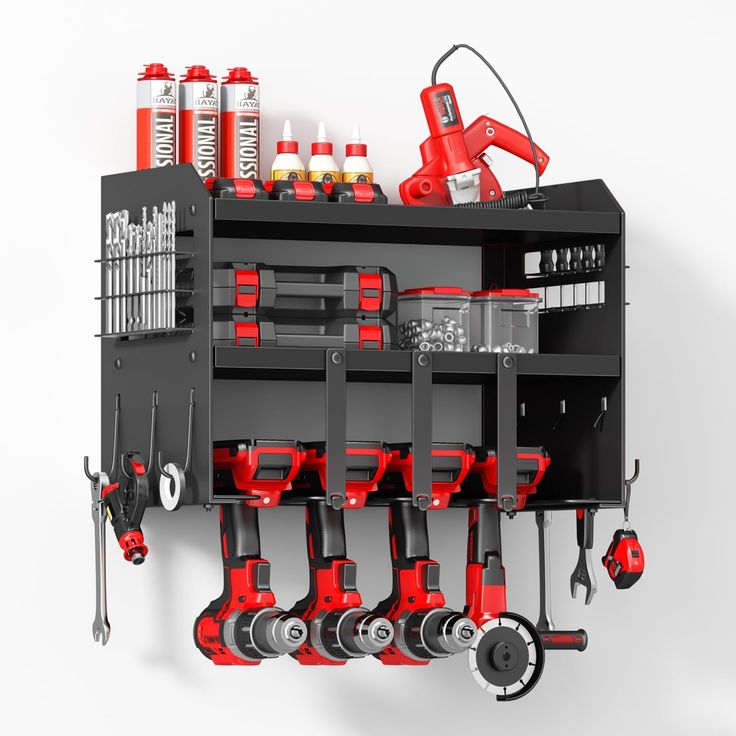
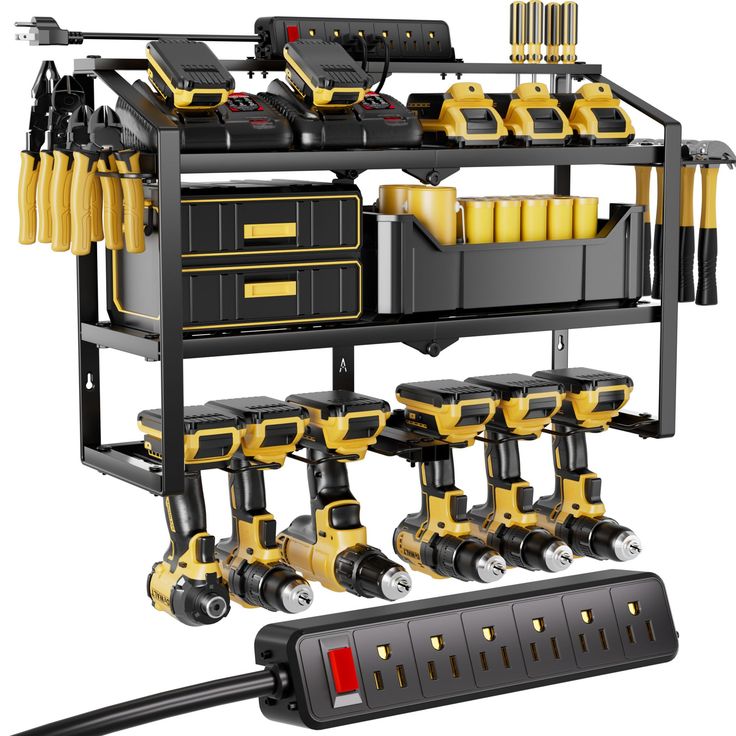
Wall mounted racks suit well in smaller locations. These systems eliminate floor space and leave tools in sight and reach.
Pegboards are also versatile. The layout can be designed according to your collection, with hooks being movable.
Tool bags or totes are an excellent option to those who like to be mobile. They are compact and can be carried to the job sites or around the house projects.
Storage bins further create a level of organization particularly on small pieces such as screws and nails. Transparent containers are easily recognizable without the need to flip through stack piles.
The decision on the appropriate type is determined by your needs as well as the space that you have in your workshop or garage.
Utilizing Labels and Color Coding Systems
An efficient system of labeling and color-coding is the key to a carefully organized system of storing tools. Labels can be used to find the tools fast, which is highly valuable in the course of the project. Being a DIY enthusiast or a professional tradesperson, a location of all things can spell the difference.
Waterproof labels are also a possibility. They are able to withstand wear and tear and still be legible. On top of that, clear fonts will be needed to read at a glance.
There is also color coding that gives more organization to increase efficiency. Create a color code of colors of various categories, red of power tools, blue of hand tools, green of garden equipment. This is not only effective in searching items quickly but it also forms an attractive display.
You may include colored bins or shelves in your scheme as well. Surprisingly, it is much easier to locate what you need when colors are used to help in the process of searching.
These systems require certain initial efforts to implement though rewarding both in terms of simplicity and productivity in the long run. With a little effort in labeling and coloring things, you will turn a mess into an order- and make any project a lot more fun and less stressful.










Leave a comment